The Good Samaritan Nuns – a Legacy

…In 1935 diocesan results were even more impressive. The six students who sat for the exams got honours in all five subjects: Religious Knowledge, English, Arithmetic, History and Geography; and took out twelve of the thirteen diocesan prizes, including best aggregate and the two prizes for Irish History…

This article by Colleen O’Sullivan appeared in the Mudgee Guardian in December 2012.

The featured image of the Good Samaritan Convent was taken in 2008.

Click below to view the full article:

Good Samaritan Nuns a legacy


The Good Samaritan Convent – a Kandos Icon

St Dominic’s Convent, despite being recently sold to a private buyer, will always be a Kandos icon. It is not just a significant piece of twentieth century architecture illustrating the Spanish Mission style. It is a visual representation of Catholic education in Kandos, as well as a reminder of the important role of the Good Samaritan nuns in Kandos history. Like other iconic buildings it contains layers of history and an abundance of stories – family and community; secret and imaginary…

This article by Colleen O’Sullivan appeared in the Mudgee Guardian in November 2012.

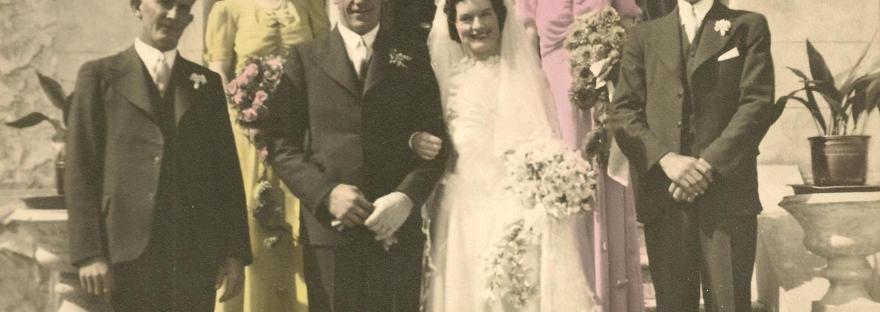
Featured image is of newly-marrieds, Bruce and Jean Brown nee Walsh, parents of the author. This photo of the wedding party is taken on the steps of the convent in 1941.

Click below to view the full article:

The Good Samaritan Convent

Sergeant Lucas Small Town Copper

William Herbert Lucas, first Kandos police officer, emerged not from local legend or family story or memory, but out of the documents of history: a paper trail of certificates, public records and old newspapers. He left Kandos in 1929 and I haven’t yet found anyone who remembers him or has written about him. It is hard to assess such a man…

This article by Colleen O’Sullivan appeared in the Mudgee Guardian on 10 February 2014.

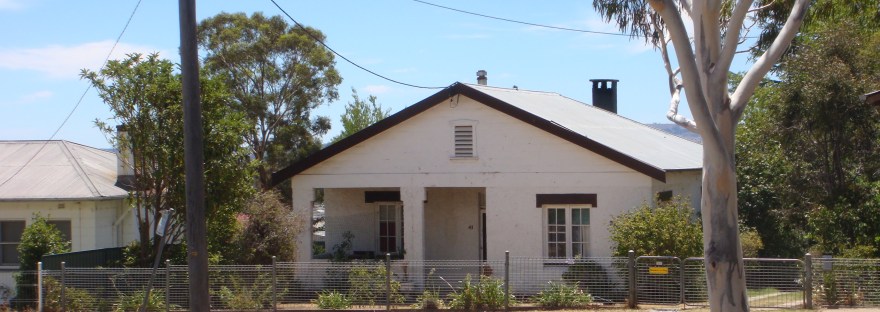
The featured image is of the first police station in Kandos (now a private residence) where the town’s first police officer Sergeant Lucas might  have been found when he was not keeping the peace, pursuing escaped prisoners, catching illegal gamblers or doing crowd control duty at football matches and race meetings.

Click below to view the full article:

Sergeant Lucas Small Town Copper


Henbury Golf Course: A Remarkable Provenance

https://www.henburygolf.com.auThe story of how Henbury came to be was a story my mother told me: “Mrs Saville and Mrs Fink had an argument on Kandos golf course, so Mrs Saville started her own course.” My mother went on to explain how her father, (my grandfather W H Walsh), wanted to show his support for Mrs Saville who was a good customer. He bought three of his daughters each a set of golf clubs and joined them at Henbury.

I liked that story. It was about a strong woman who took matters into her own hands. It was also about loyalty and unexpected gifts.

Read how Henbury became “something out of the ordinary”. This article by Colleen O’Sullivan appeared in the Mudgee Guardian 24 June 2013. 

Click here to view the full article:

Discovering Henbury

Visit Henbury online Henbury Golf Course

The featured image of Henbury Golf Course is by Karon Grant

Into the Battle of Messines WW1

Mudgee Guardian Article by Colleen O’Sullivan 5 May 2014

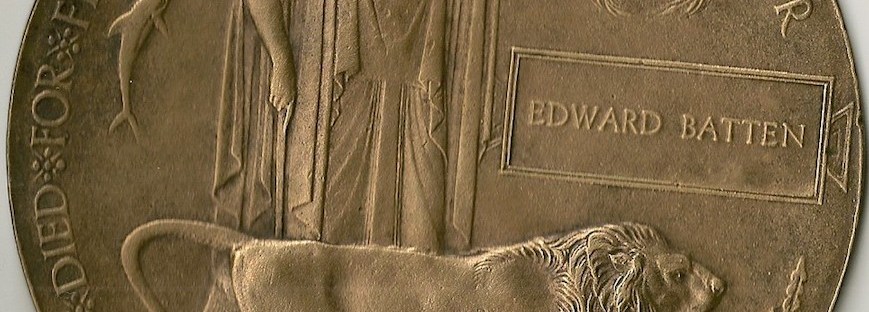
Featured image: Dead Man’s Penny. This memorial plaque was sent to Eddie Batten’s parents after he died. The family attached it to his gravestone. Some years ago a council employee found it lying nearby. 1.355 million plaques were issued to British subjects who died due to World War 1. It was known as a “dead man’s penny” because it was similarly made of bronze, though five inches in diameter.

I have long wanted to discover my great-uncle Private Edward Michael Batten, ‘Uncle Eddie’. Because, though he died so long ago, I was aware that his death caused great sadness for my grandmother, his sister. Even my aunt Meg Hughes who was only a toddler when he died was affected. No doubt my interest was captured too, in history lessons on the war and by such books as Erich Maria Remarque’s All Quiet on the Western Front.  It isn’t just Eddie I seem to be searching for, but all those young men who enlisted, yearning for heroism, and died in a futile field of mud.

Click below to view the full article:

Into the Battle

First Rylstone-Kandos Show

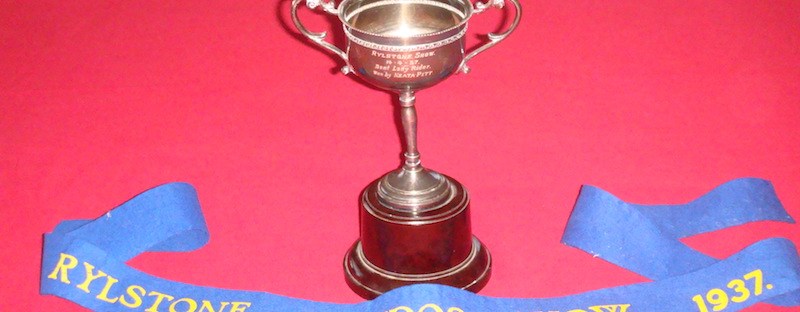
At the first Rylstone-Kandos Show on 14 April 1937 Miss Neata Pitt won the award for best lady rider over 18. The Mudgee Guardian wrote these congratulatory comments: “This talented young lady added further to her wonderful successes by annexing the ‘Dixon Cup’ and gave a fine performance of horsemanship”.

I dare say quite a few readers will recognise that young lady, who is now Neata Keech, still living, seventy six years later, on the outskirts of Rylstone.

Click below to view the full article:

First Rylstone-Kandos Show

Private Village Twentieth Century Town

Kandos had a different beginning as a private village. It didn’t grow along the wayside; it was planted. It was envisioned and planned. A group of entrepreneurs recognised that natural deposits of limestone, shale and coal near a railway line could produce a cement industry.

This article appeared in the Mudgee Guardian in May 2013.

The featured image is an early photo of Kandos, taken in the 1920s (NSW State Library).

Click below to view the full article:

Private Village Twentieth Century Town

Once a Day Dawn

Using a blend of memoir, biography and history, Colleen tells the story of her grandfather, who left home at 14, spent 14 years on the goldfields of Western Australia and, with his brothers, established the first butcher and baker shops in Kandos.

Once a Day Dawn explores: horse racing at Kandos and in the Central West; freemasonry at Rylstone and Kandos; life on the Murchison gold fields of Western Australia; migration to Nelson New Zealand; the towns of Kandos, Cadia, Portland and Gloucester; butchering in the early twentieth century.

Once a Day Dawn reveals the truths behind an early Kandos scandal and an amassed fortune.

$15 plus p&p $8

Streetwise: Finding History on the Streets of Kandos

Streetwise contains the biographies of many of the pioneers of Kandos and gives a history of each of the 40 streets, 25 parks and 18 subdivisions of the town. It includes historical maps, photos and news articles and has a detailed index. If your ancestors are not here you will find clues to discover them. And you will learn about the town in which they lived and worked.

Streetwise was supported by a grant from the Royal Australian Historical Society. It is  available from the author via this website and also at Kandos Museum, the Cottage Museum and Kandos Newsagency.

$25 plus p&p $12

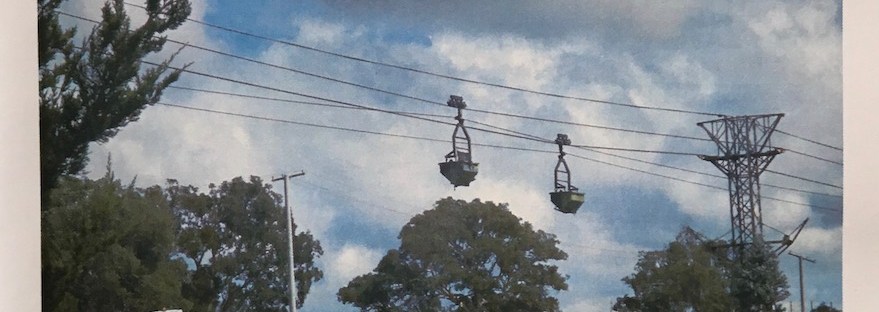
Beneath a Moving Ropeway: Architectural Landmarks of Kandos

Beneath a Moving Ropeway gives the history and architectural features of eighteen distinctive buildings in Kandos.
This 22-page booklet complements the free brochure “Come for a Walk around Kandos”. Beneath a Moving Ropeway is available from the author via this website and at Kandos Museum and the Cottage Museum.

$5 plus p&p $5

Mending Fences

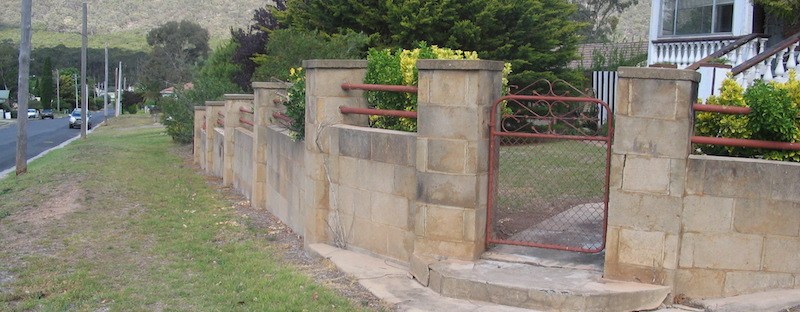
Many of the original fences have disappeared or are likely to soon disappear. It seems a pity to lose this part of our heritage. Kandos, a town built for a cement industry, with materials made by that industry, has a characteristic streetscape. The fences, in design, construction and materials, are unique to Kandos. They are worth conserving.

Click below to view the full article:

Mending Fences